Home Blog Page 22

Congo-Kinshasa: Rebellion Fears Grow in Eastern Congo

0

Butembo — While attention has focused on the raging conflict and humanitarian crisis in Kasai in the southern Democratic Republic of Congo, armed opposition groups in the east of the country have stepped up attacks and are threatening to wage all-out war.

Tension and frustration are mounting across Congo as President Joseph Kabila clings to power well after his second and supposedly final term in office expired last year.

Eastern Congo was the main theatre of two devastating civil wars, fought in 1996-1997 and then from 1998 to 2003. It still plays host to dozens of small, armed groups, many of them local “self-defence” militias known as Mai-Mai.

But recent months have seen the emergence of at least two new insurgencies that claim to have increasingly broad support in their shared aim of toppling Kabila.

In June, the National People’s Coalition for the Sovereignty of Congo (CNSPC), led by former national army ally William Yakutumba, began taking on army positions in South Kivu Province. In late September, it attacked the lakeside town of Uvira, using heavy weapons and speedboats, before being beaten back by UN peacekeepers.

Yakutumba has publicly boasted of having 10,000 fighters under his command. While the true number is impossible to establish, analysts suggest it could be fewer than 1,000.

In late September, top army General Didier Etumba described CNSPC as a “flash in the pan” and said: “We’re going to put it out.”

But Delphin Ntanyoma Rukumbuzi, a conflict reseracher and Congo expert at Rotterdam’s Erasmus University, told IRIN that Yakutumba’s force drove the national army out of a fairly large area and resisted counter-attacks, although it is unclear where it is now.

“He has disappeared into thin air with his weapons and fighters, which also raises questions about his plans for the near future,” he said. “Anything is possible, but I think he will need more military tactics, as well as human, financial, and political resources to overthrow the Kabila regime.”

For Rukumbuzi, youths recruited by CNSPC are also more likely to be motivated by chronic marginalisation and historic inter-ethnic rivalries than by any preoccupation with who is in power in distant Kinshasa.

Noting that South Kivu is also home to a range of other armed groups, Rukumbuzi warned: “It is a volatile situation that could set this Great Lakes region alight if it is not contained.”

In neighbouring North Kivu, another group, calling itself the National Movement of Revolutionaries (MNR), has been attacking villages and towns since June.

MNR spokesman John Mahangaiko Apipawe told IRIN the group had been set up in 2015 and spent the next two years discreetly organising and planning its actions.

“At the outset, we couldn’t give out information about our operations for fear of being stillborn. If, today, we are in a position to claim certain actions, it is because we are already strong,” he said.

Speaking on the UN’s Radio Okapi in July, North Kivu Governor Julien Pulaku said recent attacks appeared to be beyond the capabilities of local Mai-Mai groups and that a new rebellion was emerging.

When the Mai-Mai launch attacks, “they only resist the army’s firepower for 30 or 40 minutes. What we are seeing today is that the alleged Mai-Mai are resisting for one or two or three hours and plan attacks on three, four, or five locations within a month. This suggests a supply of munitions and heavy weapons.”

However, government spokesman Lambert Mende told IRIN the attacks claimed by MNR are the work of bandits.

“They are only there to loot people and our natural resources. That’s why we take this opportunity to warn them. Whatever their demands, whatever their origins, whatever internal or external support they have, there is no more time for negotiation,” said Mende.

“Just as we defeated the M23 [rebels in 2013], we will also meet them with arms. Our forces are there for that. Those guilty of crimes will find themselves up against their natural judges.”

But Pulaku, North Kivu governor for 10 years, urged the army to take the new threat more seriously. “We might believe these are only local armed groups, when in fact a major war is going to start,” he warned. src:irinnews.org
Burundi bans women from playing traditional drums

0

Burundi’s president, Pierre Nkurunziza, has introduced strict controls over the country’s renowned drumming rituals, banning female drummers and limiting the sacred tradition to official events.

“It is strictly forbidden to those of the female sex to beat drums. They can however carry out female folk dances accompanying the drums,” read a decree seen by AFP Thursday, that was signed late last month.

All groups seeking to perform “cultural shows” must from now on register with the ministry of culture and are not allowed to perform outside of official ceremonies without authorisation from the ministry.

Burundi’s ritual dance of the royal drums was in 2014 placed on UNESCO’s Intangible Cultural Heritage list, which describes it as “a spectacle combining powerful, synchronised drumming with dancing, heroic poetry and traditional songs.”

It says the “entire population of Burundi recognises it as a fundamental part of its heritage and identity.”

Today, the drums are played for entertainment: but for centuries they were a sacred rite, symbolic of a united kingdom – a powerful memory for a country whose recent history has been scarred by civil war and political crisis.

In the country’s Kirundi language, the word for drum — “ingoma” — is the same as that for kingdom.

In modern times drumming groups have flourished, performing at weddings, graduation ceremonies and baptisms.

While traditionally a male-dominated field, several female drumming groups have emerged in recent years.

The presidential decree, signed on October 20, said that if an organiser gets permission to have drummers perform at an event, he must pay the Treasury a fee equivalent to 245 euros ($280).

This figure is to be paid daily if the group performs abroad.

Burundians on Twitter slammed the decree as an “authoritarian slide” and a “sign of increasing efforts to control Burundian society”.

“This decree means the drums no longer belong to Burundian citizens but to the government”, said Pacifique Nininahazwe, an exiled civil society leader.

Last month Burundi’s government adopted a plan to revise the constitution that, if voted in by referendum, would allow Nkurunziza to serve another two seven-year terms from 2020.

The country was plunged into crisis when Nkurunziza sought — and went on to win — a third term in 2015. Between 500 and 2,000 people are estimated to have died in the ensuing turmoil, according to varying tolls.src :Sunday Time

From Rwanda Dissidents, Podesta Group Probed for Russia-Trump Links

0
Rwanda Dissidents

Podesta Group – a lobby firm which Rwandan exiled politicians have been paying tens of thousands of dollars to access US lawmakers, is being investigated in the Russian election medalling probe.

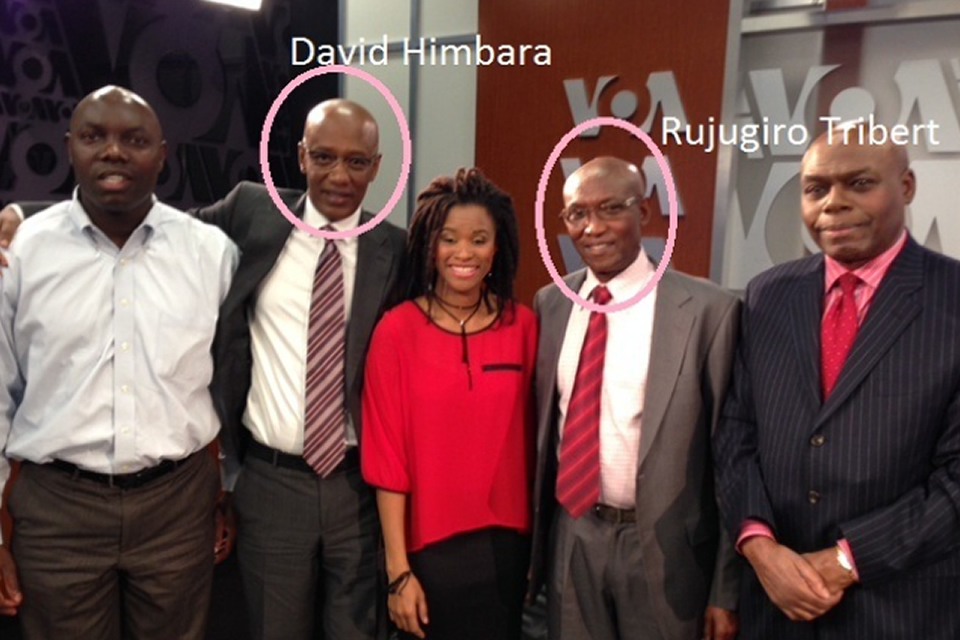
The firm has been paid total of Rwf 440,000 to help Rwandan tycoon Tribert Rujugiro and his partner Dr David Himbara access Congressman Chris Smith, chair of House foreign affairs sub committee on Africa. The payments were made at different times since 2014, and as recently as July this year. (Read details here: Rwanda Dissidents Pay $440,000 For Hearing In US Congress)

On Monday, the Podesta Group and another company with which it had worked, Mercury Public Affairs, were referenced — though not by name — in an indictment of two former Trump campaign officials, Paul Manafort and Rick Gates. The details are reported by The New York Times.

Both firms have been subpoenaed for records and testimony about their work on behalf of a client referred to them in 2012 by Mr. Manafort and Mr. Gates, the European Center for a Modern Ukraine, a nonprofit group based in Brussels.

The work for the European Center, which ended in 2014, was cited in the indictment on Monday as part of a “scheme” by Mr. Manafort and Mr. Gates to gain support in Washington for their longtime client, the pro-Russian leader Viktor F. Yanukovych, a former president of Ukraine, while evading disclosure requirements for foreign lobbying.

Back to the Rwanda saga, as a result of the cash payments, Himbara secured a hearing on September 27.

News RGB urges NGOs on citizen-based development, innovativeness

0

The Chief Executive Officer of Rwanda Governance Board, Professor Anastase Shyaka has called upon representatives of International Non-Governmental Organizations(INGOs) operating in the country to strengthen cooperation in the implementation process of programmes that are meant for enhancement of people’s livelihoods.

Shyaka was speaking Monday during a dialogue that brought together RGB and representatives of INGOs in Rwanda aimed at discussing and identifying collective partnerships that would lead to inclusive citizen-based development.

Shyaka said that INGOs have ample programmes which help the country attain its development goals and called for better management of projects funds to reach as many beneficiaries as possible.

“Despite the short time we’ve worked together, there’s ample hope that focus shall be directed towards building foundations that will enable bringing as many people in the loop that will be benefitting from the mutual projects ” he said.

“For the government to get INGOs operate under RGB, the intention was to deepen cooperation with all organizations, strengthen transparency and innovativeness so that we get win results,” he said.

The head of International NGOs forum in Rwanda, Papa Diouf said that since they started to operate under RGB guidance, a number of positive developments have been realized.

Currently, there are 173 non-governmental organizations operating in the country.

In February 2016, RGB was given the mandate of registering and regulating local International NGOs’ responsibilities that were previously held by Migration Office.

Rwanda moves into top ten in hotel investment

0

The Rwandan hotel investment market has improved strongly over the last eight years, according to the African Hotel Report 2017 by Hotel Partners Africa.

According to research to be released at Africa Hotel Investment, Rwanda has entered the top ten most valuable countries in Africa for hotels for the first time.

Serena Hotel (Photo courtesy)
In addition, with average growth in hotel values of 8.8 percent over the last eight years, Rwanda experienced the sixth-highest growth on the continent over that period.

“That values have increased in 2017 despite the large influx of new supply in the last two years is testament to the confidence that investors have in the stability of the government and the overall investment climate,” said David Harper, the report’s author for Hotel Partners Africa.

Rwanda is held out by many as a beacon across Africa for property investment.

With ease of doing business rating of 67 (out of 189) from the World Bank and a property rights protection rating ranked at 28 (out of 145), investors have found the climate conducive to property deals.

The government’s concentration on providing infrastructure, reducing ‘red tape’, and stamping out corruption has all enabled foreign investors to feel confident in the country’s future.

Some four new branded hotels with 544 rooms are planned for Kigali.

This report shows that the hotel industry in Africa is still a very good investment, despite the cyclical nature of the property market.

Rwanda enjoys cooperating with Azerbaijan

0

Rwanda is interested in cooperation with Azerbaijan in economic, humanitarian, transport and communication spheres, Rwanda’s President Paul Kagame said.

President Kagame made the remarks at the meeting with Azerbaijani Ambassador to Ethiopia Elman Abdullayev, the Azerbaijani Foreign Ministry said in a message on Oct. 11, according to Trends News Agency.

Sources added that according to the message, at the meeting, Abdullayev presented his credentials to President Kagame.

During the meeting, Abdullayev extended Azerbaijani President Ilham Aliyev’s greetings and best wishes to President Kagame and stressed that Azerbaijan attaches great importance to the development of relations with Rwanda both on bilateral basis and as part of international organizations.

In his turn, President Kagame asked to convey his greetings and best wishes to President Aliyev, stressing that Rwanda is interested in cooperation with Azerbaijan in the economic, humanitarian, transport, and communication spheres.

Rwanda’s president stressed that Azerbaijan’s rapid development impressed him greatly and wished the ambassador success in his forthcoming activity.

Azerbaijan, the nation and former Soviet republic is bounded by the Caspian Sea and the Caucasus Mountains, which span Asia and Europe. Its capital, Baku, is famed for its medieval walled Inner City. Within the Inner City lies the Palace of the Shirvanshahs, a royal retreat dating to the 15th century, and the centuries-old stone Maiden Tower, which dominates the city skyline.

The change in definition of employment rises numbers of unemployed

0

The Director-General of NISR, Yusuf Murangwa says the rise in the unemployment percentage was due to the change in the definition of employment.

Recently, The National Institute of Statistics of Rwanda has released the labor force survey. The survey put overall unemployment in Rwanda at 16.7%.

Murangwa noted that under the new definition, persons in employment are those aged 16 and above who are engaged I any activity to produce goods or provide services in exchange for pay or profit.

Rwanda population pyramid (photo internet)
The 19th International Labor Organization conference of labor statisticians held in Geneva, October 2013, resolved new standards and definitions regarding statistics of work, employment, and labor underutilization. The new standards and definitions replaced those of the 13th conference held in 1982.

The labor force survey was designed to allow the computation of key labor market indicators using both new and old definitions. Under the new definition, as of February 2017 unemployment was 4.5% under the previous definition and 16.7% In the new one, the youth unemployment rate was 7.1% nut under the new definition it was 21% and the percentage working in agriculture was 68% under the old definition and 45.9% under the new one

From a policy perspective, the Minister of Finance and Economic Planning Claver Gatete noted that the new definition provides the opportunity for proper assessment that allows adequate measures of promoting productive and decent work to be implemented.

Rwanda Beats African Economic Giants in Latest Global Competitiveness Index

0

How could a small country with a lean economic muscle like Rwanda outdo well-established African economies like Nigeria and South Africa?

It is the baffling question that economic experts have to grapple with after Rwanda emerged the most competitive African country in the just released Global Competitiveness Index (GCI) report.

The index, which analyzes national competitiveness on the basis of the institutions, policies and factors determining the level of productivity, ranks Rwanda at number 58, globally, with a score of 4.35, ahead of African economic giants like South Africa, Nigeria, Egypt, Morocco, and Algeria.

South Africa, the third largest economy in Africa, is the second African country on the list at number 61 with a score of 4.32, followed by its neighbor Botswana at number 63 with a score of 4.30.

Surprisingly, Nigeria, which is currently regarded as the largest African economy comes in at number 125, behind some rather beat-up African economies such as Zimbabwe, which is in position 124, Benin, Swaziland, Uganda, Zambia, Mali, The Gambia, Cameroon and several others.

How Did Rwanda Do It?

Since 2013, Rwanda has enjoyed a relatively steady growth in its Gross Domestic Product (GDP), which is expected to rise to 7.5 percent this year. Part of this growth has been attributed to the efforts put in place by the government to reconcile and unite the country after the deadly genocide in 1994.

The East African nation is also making significant progress in many of its economic sectors, including agriculture, tourism, energy, transport and ICT.

Last year, the World Bank ranked Rwanda as the second easiest country in sub-Saharan Africa to do business in and the top country in East Africa.

This unswerving progress has put Rwanda at par with some of the well-established economies of the world, with some experts predicting that the tiny East African state will soon be a force to reckon with globally.

Measuring Economic Performance

The Global Competitiveness Index measures the performance of about 140 countries from around the world on 12 key factors of competitiveness. It analyzes these factors alongside institutions identified through empirical and theoretical research as determining progresses in productivity.

According to GCI, these institutions are the key determinants of long-term growth and essential factors in a country’s economic development and success. Therefore, the main intention of preparing the GCI report is to help decision makers appreciate the complexities involved in development.

Once they understand the likely challenges, then they are in a better position to formulate well thought out policies, based on collaboration between the private and public sectors. With the help of this report, decision makers are also able to restore confidence in the possibilities of continued economic progress.

The 2017-2018 GCI identifies three main bottlenecks and lessons related to economic development, public-private cooperation, and policy action.

“First, financial vulnerabilities pose a threat to competitiveness and to economies’ ability to finance innovation and technological adoption; second, emerging economies are becoming better at innovation but more can be done to spread the benefits; third, labor market flexibility and worker protection are needed for competitiveness and shared prosperity in the Fourth Industrial Revolution,” the GCI report reads in part.

The report concludes by calling on decision makers to ensure their economic policies are focused on people’s well-being, adding that competitiveness remains a critical contribution to the larger goal of human-centric economic development through the creation of essential resources for improved well-being.

Our country’s security is a responsibility of every citizen- Governor Gatabazi

0

Northern Province Governor Jean Marie Vianney Gatabazi has said that Rwandans have matured to understand that matters of national security are each one’s responsibility.

The governor made the remarks while addressing Burera security where he was flanked by the Northern Region Police Commander Chief Superintendent of Police (CSP) Eugene Kabasha along with several other officials.

The meeting that was attended by over a thousand residents, addressed key security issues ranging from domestic violence to drug trafficking and abuse.

“Today, all Rwandans have prioritized national security and made it an individual responsibility however; the few minor cases that are record can as well be handled. We can only address these concerns if we stand up against such offenses. That can only be achieved by working closely security organs,” said Governor Gatabazi.

He also called upon leaders and the residents to work together and toughen crime prevention measures. “Maintaining law and order is a collective responsibility of every responsible Rwandan and that why everyone should respect the initiative of ‘neighborhood watch’…be an eye for each other, and that way, criminals will find it hard to succeed in their ill-plans and equally easier to locate and arrest them.”

He appealed to the residents to refrain from domestic conflicts, and always seek the help of Police, mediators or even leaders to handle and solve their grievances instead of taking matters into their hands that also labels them “criminals.”

During the meeting, CSP Kabasha appealed to residents to strengthen community night patrols and always hurry to report any information on unlawful acts to the Police for a quick response or arrest of any possible criminals.

The DPCreminded those attending the function of the concern of trafficking, selling and abusing narcotic drugs such as cannabis, locally made psychotropic substances and banned gin such as Kanyanga and other gin packed in plastic bags.

“There is a connection in most crimes to drug abuse. Theft, family conflicts, gender based violence, child abuse, fighting and school drop outs; all these are in most cases committed by people under the influence of drugs,” he observed, calling for concerted efforts and information exchange with the police to arrest the dealers.

He appealed to the local leaders to take the lead in this fight adding that their responsibility and success in implementing development programmes depends on the level of security as well.

ROHINGYA :The UN could learn from the Rwandan history in 1994 Tutsi genocide

0

Over one million Tutsi were killed during the 1994 Genocide against Tutsi the world was watching when atrocities were being committed, the same thing might happen in Myanmar if no action is taken, United Nations should learn from what happened in Rwanda.

Just like for Rwanda, Tutsi were targeted , they were discriminated based on their nose, height and assets; as abuses went on, over one million Tutsi were killed and thousands of them fled their homes to neighboring countries. Same scenario of the Rohingya, when you look into what is happening in Myanmar; Reports indicate that over 1,000 Rohingya Muslims have been killed and over 420,000 have fled their homes ever since the conflict started, Rohingya are being targeted due to their Religion and beliefs, the aim of the attack is to cleanse the Rohingya tribe.

During the 1994 in Rwanda, the United Nations watched silently as Tutsi were being killed, failed to take action be it the humanitarian aids or military actions against the Genocidaires’ force.

When atrocities were being committed against the Tutsi, the international organization never intervened; when some activists alerted the world of the Genocide happening in Rwanda, the United Nations played down the claims, the peacekeeping forces which were sent in Rwanda mostly French, who were more over partners with the Geocidaire regime, never protected people citing their limitations in the mandate; if it wasn’t for the then Rwanda Patriotic Front Army Tutsi could have been killed all.

Same case with the Rohigya, the international organization has been watching what is happening but failed to take action be it the humanitarian aid or military actions such sending peacekeeping forces etc; its only after some activists and television networks such as Aldjazeera alerted the world about the Rohingya crisis that the United Nations spoke about it and called for end of atrocities.

However, Myanmar de facto leader Aung San Suu Kyi played down the claims of atrocities and blamed people for misinformation for complicating the conflict; her speech did not go down well with the Rohingya who responded with anger and skepticism calling her a traitor burying their heads in the sand.

The Myanmar government has as well refuted the accusations of abuses and killings against the Rohingya claiming to be defending the country against increasing terrorist activities which destabilize the security of the nation; In September 2016 a commission set up by the United Nations had urged the government to end the militarised crackdowns on the neighborhoods where Rohingya lives and remove restrictions on movements and citizenships; this reminds me of the then leadership in Rwanda which never accepted the atrocities and abuses against the Tutsi only claiming it to be a normal conflict between neighboring tribes and that the government forces were fighting the rebels destabilizing the Rwandan territory yet killing its own citizens.

However, the Rohingya crisis differs from the Rwandan case, as for Rwanda the Genocide against the Tutsi was planned long while ago prior to the Genocide, the then leadership started harassing and killing Tutsi in 1959 by burning their houses, killing and eating their cows, denied them education as well as ceasing their lands; people were educated and trained to kill, the genocide ideology was taught in schools with intention to cleanse the Tutsi tribe, it then escalated year by year until Tutsi started fleeing their country which led to the Genocide.

We have seen the similar cases as happened in Rwanda such a target of a certain group or tribe of people, quiet involvement of the United Nations and denial of atrocities being committed against same group of people; these facts raise red alert, if no intervention is made, genocide may happen against the Rohingya.

The United Nations should learn from the mistakes made during the 1994 Genocide against Tutsi in Rwanda and quickly take action in Myanmar so that what happened in Rwanda never happens anywhere in the world.