Home Blog Page 8

Animal Rights Groups Fail to Hijack Africa Wildlife Economy Summit

0

Consumptive tourism which includes wildlife trophy hunting and hunting for meat contributes 90% of the tourism revenue that southern Africa generates annually said an Oxford University trained Associate Professor of ecology and economics, Dr Brian Child, speaking at the Africa Wildlife Economy Summit.

Dr Child said that non-consumptive tourism that includes travel tourism only contributes a distant 10% of southern Africa’s annual tourism revenue.

“If Africa is serious about growing wildlife economy it needs to grow both its non-consumptive and consumptive use tourism enterprises, particularly consumptive tourism that Dr Brian Child said contributes 90% of southern African countries’ annual tourism earnings,” said Dr Morrison Mtsambiwa, one of Africa’s top ecologists and former CEO of the Kavango Zambezi Transfrontier Conservation Area (where Botswana, Namibia, Zambia and Zambia share their borders) and former Director General of the Zimbabwe Parks and Wildlife Management Authority.

Beyond tourism enterprises, the growth of Africa’s wildlife economy can be further boosted by trade in Africa’s abundant wildlife products such as ivory and rhino horn.

Sadly, the text of the UNEP convened and Space for Giants (a western animal rights groups that is against hunting and ivory trade) sponsored Africa Wildlife Economy Summit held in Victoria Falls, Zimbabwe from 24-25 June 2019 was disturbingly silent on consumptive use economic activities such as hunting.

Therefore, the agenda that was set by Kenya-based UNEP and Space for Giants (SfG) to grow the African wildlife economy exclusively using non-consumptive tourism raised a lot of curious and puzzling questions than answers.

As the reality sank in that non-consumptive use was curiously excluded from the Summit agenda, the next and inevitable question was who would put it consumptive use on the Summit agenda?

To the relief of the pro-consumptive tourism delegates at the Summit, Zimbabwe President of Zimbabwe, Emerson Mnangagwa authoritatively and refreshingly brought the consumptive use of wildlife issues on the Summit agenda while delivering his keynote address to the Africa Wildlife Economy Summit. To the shock and of course disappointment of animal rights groups, President Mnangagwa touched on hunting, a topic that was suspiciously excluded from the Summit agenda.

“Safari hunting is a vital cog in wildlife economy,” said President Mnangagwa. “Profits from hunting are used to provide water and fencing to reduce human wildlife conflict and law enforcement against poachers. We continue to call for free trade in hunting products as these have positive impact on the economies of our countries.”

This pro-hunting remark spelt doom and failure to the western animal rights groups’ attempt to exclude wildlife use from the Summit agenda. Of course they shared that shock with local anti-wildlife use tourism business leaders that had a hand in crafting the wrong and suspicious non-consumptive use ‘recipe’ for growing Africa’s wildlife economy.

President Mnangagwa said that the animal rights groups were wrong in their thinking that animals should not be used to sustain people’s livelihoods.

As President Mnangagwa continued to use his keynote address to put on the Africa Wildlife Economy Summit agenda, the sorely missed consumptive use issues that could not go without being discussed if Africa is serious about growing its wildlife economy; smiles were visibly written on almost all the pro-sustainable use African delegates with long faces worn by the western animal rights groups that wanted to hijack the Summit to introduce animal rights groups values into southern Africa.

President Mnangagwa then said in a pointed call for Zimbabwe to be allowed to sell its stockpiled ivory and rhino horns, “Currently Zimbabwe has about US$600 million worth of ivory and rhino horns stocks, most of which came from natural attrition of those animals. “If we are allowed to dispose the same under agreed parameters, the revenue derived therefrom would suffice to finance our operational conservation efforts for the next two decades. We encourage a process where accruing benefits from natural resources are fairly and equitably shared among communities living within wildlife areas. This way the wildlife resources add value and improve the quality of life of local communities and the quality of life of animals themselves.”

If this was a boxing match against animal rights groups then President Mnangagwa must have landed the knockout punch on animal rights groups when he went further to explain that animal rights groups are a threat to wildlife conservation because they put wildlife above the people and yet God teaches that human beings are the custodians of wildlife and should benefit from it.

President Mnangagwa said that it was high time that the UN Convention on International Trade In Endangered Species of Wild Flora and Fauna (CITES) was made aware that the one-shoe-size fits all approach that is creeping in its decision-making process to ban ivory trade was an unfair and intolerable method of determining who should trade or should not trade in wildlife products such as ivory and rhino horn.

This was a timely message to CITES member countries worldwide, whose votes determine whether or not proponent countries can be allowed to trade in ivory and rhino horn. The CITES Secretary General Yvonne Higuero whose organization presides over the CITES voting system got the message loud and clear as she was seated in the front row as President Mnangagwa delivered his keynote address.

President Mnangagwa said that it was crucial that Africa consolidates its position in support of sustainable development as we head to CITES COP18.

Soon after, President Mnangagwa finished his laudable pro-consumptive tourism and wildlife use speech all the other southern African countries presidents also similarly spoke in support of ivory trade and consumptive use and the need for rural communities living side by side with wildlife to also benefit from it. It was impressive that the southern African countries presidents were not divided by western animal rights group as sadly happened during president Khama’s animal rights influenced wildlife management era, when Botswana uncharacteristically and worryingly opposed ivory trade and hunting. The united southern African presidents included Edgar Lungu of Zambia, Hage Geingob of Namibia and Mokweetsi Masisi of Botswana as well as Angolan president Jao Lourenco who was represented by his minister of environment.

Fourteen African ministers of environment from all regions of Africa attended the Summit.
Rwanda President Kagame while African Union Chair was persuaded to support this initiative to hold the first ever Africa Wildlife Economy Summit in Victoria Falls Zimbabwe.
Over 40 community representatives from 12 African countries attended the African Wildlife Economy Summit and called for the need to reduce poverty at household level through turning wildlife into a rural economic engine.

“The declaration is about sustainable use which includes hunting and need for the communities living next to protected areas to benefit from wildlife and natural resources,” Dr Lamson Maluleke a representative of South Africa’s Limpopo Province-based Makuleke Community.

Meanwhile, Mr Charles Jonga, the Executive Director for the Zimbabwe Communal Areas Management Programme For Indigenous Resources (CAMPFIRE) Association said that he was not aware that the Space for Giants “is an animal rights organization.” He said that he was concerned that there had been an attempt to have the African Wildlife Economy Summit exclusively focus on non-consumptive tourism.

One of Southern Africa’s most successful non-consumptive tourism businesspeople who is supporting the Africa Wildlife Economy initiative, Mr Derek Joubert publicly announced his anti-hunting position while taking part in a tourism investment challenges panel discussion. “I am not a hunter,” he said. “And so I was a bit worried coming up here (on the stage) and be sustainably harvested myself. Wildlife is what we have to protect, I don’t even like the word conservation I think we have got to evolve this to a new conversation – a new ethic, a new earth ethic.”

Mr Joubert said that one of the initiatives that they are working on is to raise US$200 million to acquire tourism properties and operate them for three years, working with communities and in the last phase between three and four years do a complete handover to the communities.

“I know that the Space for Giants is an animal rights groups and that they are coming in the name of ecotourism which is an easy product to sell to communities and internationally,” said a Namibian representative for the Namibian Association of CBNRM Support Organisations (NACSO), Ms Max Louis. “Therefore, they are using ecotourism to derail the sustainable use agenda in southern Africa. We will not allow animal rights groups to come and change our sustainable use agenda in southern Africa. We will continue to defend sustainable use. We were aware that the animal rights agenda was being forced on us.”

However, while Southern Africans might not fully welcome the Space for Giants and Derek Joubert sponsored non-consumptive tourism drive in southern Africa, well placed sources said that they have already started meeting southern African governments, in order to introduce this initiative.

They have also started promoting non-consumptive tourism projects in Rwanda, Kenya and Uganda where progress is at a comparatively advanced stage compared to their initial efforts in southern Africa.

“At the moment the consumptive tourism such as hunting is bringing much more money to the majority of Africans,” said Alderman Jerry Gotora, the Chairman of painted dog project and Founding Director of Gonarezhou Conservation Trust. “The capitalists don’t want to see more money going to the majority of Africans. They think that blacks from this region shouldn’t be privileged to enjoy money from hunting. They want to keep money to themselves through an exclusive focus on non-consumptive tourism. That is why they excluded consumptive use from the agenda of the Africa Wildlife Economy Summit.”
The Africa Wildlife Economy Summit came to southern Africa at a time when Botswana President Masisi is facing fierce animal rights opposition for listening to his country’s citizens, particularly those from rural communities to resume hunting.

Well-placed sources said that President of Botswana Mogkweetsi Masisi had to be persuaded to attend the African Wildlife Economy Summit after refusing to attend a Summit sponsored by the Species for Giants; an animal rights group that worked with Mokgweetsi’ well publicized opponent, former President of Botswana Khama. The Space for Giants reportedly apologised to President Masisi for working against both the citizens of Botswana’s conservation values and his political future but he still turned down the Space for Giants overtures. Well placed sources said that President Masisi only agreed to attend the Africa Wildlife Economy Summit after having been persuaded to do so by a President from a very friendly southern African country.

Ironically, President Masisi is curiously listed as a member of the Space for Giants on their website, alongside with Presidents of Kenya, Uganda and representatives of western animal rights groups, etc. He was apparently made to sign-up to this membership incognito when he succeeded Khama. There is no doubt that President Masisi might be making frantic efforts to have his country and face photo removed from the Space for Giants website.
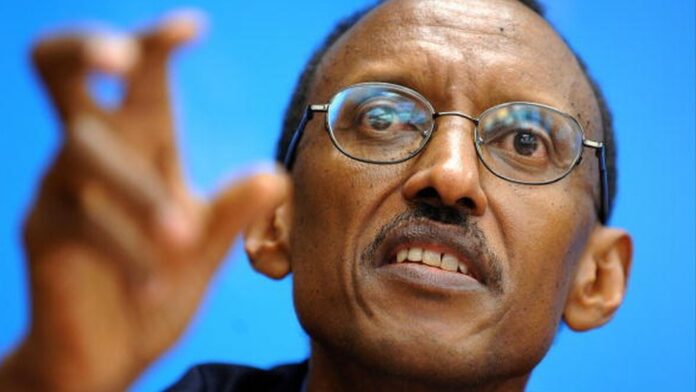
President Kagame calls African countries to Strive for their Self reliance

0
President Paul Kagame

President Paul Kagame, a president of Rwanda as well as a leader of UN in Global Citizen Festival in South Africa, asked countries to strive their self-reliance as a key of their development.

President Kagame explained that the more the countries look for their ways the more they get to be independent.

“Being independent requires hardworking and self-assessment with goal achieving”

He said that African countries also need to continue building the capacity to generate revenues domestically to entrench a sense of ownership of the SDGs, reduce dependence on ever scarce funding, and ensure sustainability of results.

“Our countries also need to continue building the capacity to generate revenues domestically so that we can entrench a sense of ownership of the SDGs, reduce dependence on ever scarce funding, and ensure sustainability of results,” President Kagame said, adding that “We are encouraged by the good progress in the institutional reform of the African Union, which is already enhancing self-financing, efficiency and coordination.”

“Let us take advantage of this momentum, to collaborate even more productively with our global partners, and move faster towards attaining the SDGs by 2030,” Kagame urged.

The Global Citizen Festival 2018 was celebrated by celebrating also 100 years since Nelson Mandela was born.

President Kagame added on that this African Union changes intended to strive the self-reliance of this organization as a key to a better development.

President Paul Kagame has called on African countries to keep up the momentum of self-reliance as protected in the African Union institutional reforms in a bid to move faster to achieving the Sustainable Goals (SDGs).

Things You Should Know about Expo 2019

0

The Rwanda International Trade Fair 2019 or Expo 2019 will officially open on 22rd July to end on 11th August at Gikondo Expo Grounds.

This annual event is organised by Private Sector Federation (PSF) in partnership with Ministry of Trade and Industry and this year will host 500 exhibitors from 25 Countries according to Eric Kabera, the PSF’s head of Communications and Marketing .

“We will have 500 exhibitors from 25 countries, we have constructed a new Exit route where people will be passing and it will help easing movement of people.

People will be using mobile money to buy Expo tickets and more information and clarification will be announced during the press conference on Thursday.

Another thing special in this exhibition is that Rwandan traders will be networking with foreign traders following their trading categories to exchange views that are important to boost their businesses.
Kabera explains that the Rwanda International Trade Fair has marked a significant impact so far as most of foreign Trade institutions that participated have already opened their branches in Rwanda.
“It has been proven that many of foreign traders have established activities here in Rwanda after seeing that business investment and practice is very easy here,”

PSF has also constructed a new exit route that will help people to avoid the usual crowd at the Expo event Kabera noted. Kabera notes

Kicukiro : Women Expand Business Dreams after the Support from Rwandan Women in Germany

0

Recently in March 2019, Rwandan women who were undergoing the needy life situation got material support including Tailoring machines from women in Germany Diaspora.

The community of Rwanda’s women in Germany supported these women in Rwanda to contribute to the development and resilience of the country.

Epiphanie Nyiraseka, the mother of three children is among the beneficiaries. She was assisted to learn tailoring and is now a tailor who is striving for a decent life in this business.


Epiphanie Nyiraseka
“I used to be busy on myself at home but now after joining tailoring school my dream is to be a business woman and I like working together with my colleagues. I recognize the efforts and good heart of women in German community who supported us, we will work hard to prove the results.” Nyiraseka said.

Monique Mukabugingo is a housemaid in Kigali. She was also thinking on how she could have practical skills and her dreams came true when women who live in German approached them.


Monique Mukabugingo stating in tailoring electronic machine

She said she gained a lot in learning tailoring as she can perform in making different styles of clothes.
“Ourselves could not manage to buy a tailoring machine, it is a good initiative of Rwandan women in German Community to give us this significant aid,” she said.


Alice Uwamahoro (photo The Express News )

Alice Uwamahoro, another young girl from Remera Sector, Gasabo District has joined the tailoring school a couple of days in October, 2019. She wishes to gain needed skills and be an entrepreneur.
“I thank these donors, it is a great job they did and I request them to continue with this heart. If possible they can give us more machines to enable us expand tailoring activities in workshops,” she said.

Console Uwangirigira from Kicukiro District is a mother of two Children who also joined the school in April, 2019. She was concentrated in learning the way long in six months.


Console Uwangirigira was finishing six months training and stating her business

“We learnt to make various products including clothes, bags, and more. We started from manure machines and later we applied electric ones. It is a good initiative to think about Rwandan women and we thank the Rwandan women in German community. We can request them to also think how they can further support us as we leave this tailoring school.” Uwangirigira said.


Mukamwiza Director of Kicukiro Women Training Center

Therese Mukamwiza is the Director of Kicukiro Women Training Center said that they helped youth and women to leave various lures including sexuality and street businesses.
The school started in 2014 with the aim to support needy women and youth.
“We only had manual machines and women in German Community gave us electronic ones. These machines enable users to make much money. We teach them in six months and give them a two-month internships then we recruit others. We wish to expand activities by increasing classrooms from 2 to 5. We also continue to follow on finalists, they have will to work but they lack capacity to buy electronic machines,” she said.
Rwandan Women in Germany contributed tailoring machines to this school with the value of Rwf3million.

Rwanda was ranked as 78th best country to do business in the world.

0

Rwanda and South Africa were rated above Nigeria on the African continent. A total of 153 countries were surveyed.

The American business magazine made this known in its Index of Best Countries for Business Report released last Friday.

The report, according to TheCable, said in the period under review, Nigeria experienced positive economic growth driven by its agriculture, telecommunications and services sector.
In the overall ranking, Nigeria was ranked as 115th best country to do business in the world.
The rankings were based on 15 different factors including property rights, innovation, taxes, technology, corruption, freedom (personal, trade and monetary), red tape and investor protection.

Cumulatively, South Africa was ranked 48th while Rwanda scored 79th on the index for best country to do business.
Listing key indices used in its computation, the report said Nigeria’s GDP as of December 2017 was $405 billion while GDP growth was -1.6 percent in the period under review.

Rwanda’s economy is expected to grow by 7.2 per cent in 2018 riding on the services sector, agriculture and a rebound in construction activities

The economy in 2017 grew by 6.1 per cent surpassing earlier projections of 5.2 per cent.

In 2010, Rwanda attracted US$400 million in investments. The figure has grown by four folds. In 2017, the country registered US$1.6billion.

The number of businesses registered per year has also grown exponentially from 2,000 in 2009 to 13,000 in 2017.

These results have come at a price; hard work, mistakes, criticism, stalled projects, but also good fruits.

In 2017, mineral exports grew significantly by over 210 per cent to $248.5 million, compared to $80.1million in the previous

Rwanda remarkable beyond genocide

0

WHEN an opportunity to visit Rwanda arises, genocide immediately comes to mind.
Rwanda witnessed one of the worst genocide ever when one million Tutsis and moderate Hutus were murdered by the government of Juvénal Habyarimana in 1994.

Genocide was the last straw by the Hutu-led government who attempted to wipe out Tutsis.

Despite the chill that goes down the spinal cord when the thought of travelling to Rwanda comes, it yet becomes a learning point to go and see that country’s rising story.
It is amazing how Rwanda has put behind the genocide to become one of the fastest growing economies in Africa.
Paul Kagame’s inspirational leadership is the reason Rwanda has rebounded from an impoverished nation heading towards a prosperous middle income country.
Kagame and the ruling Rwanda Patriotic Front (RPF) have re-aligned the land-locked East African to a point of a new economic and social policy, focused on strategic investments.
At the core of Kagame’s leadership is the improvement of people’s livelihoods.
President Kagame’s leadership starts from the party which has disciplined cadres as I witnessed myself during the RPF’s international and national congresses.
The discipline I saw in Kigali is the one I am yet to see in my country as the cadres have respect for the party authorities and when it was time for meals, there was no scrambling.
I was also amazed to see how the RPF has branded its regalia. It is the kind any person would want to wear without shame.
The RPF, which has been observing 30 years anniversary, has its own convention centre on the outskirts of the capital, Kigali.
It also has its own anthem which the party members sing during their functions.
If there is anything I admired about the RPF cadres is discipline. The party stuck to the time table of events religiously.

CLEANLINESS

During the short period I spent there last week, I observed how clean the streets of Kigali are.
To see liter in Kigali is a taboo because the Rwandans, under great leader Kagame have disciplined themselves. Maybe it is the reason it is impossible to hear cholera outbreaks there.

The Rwandas have set aside one-day in a month (for three hours) for community work (two hours) and hour to discuss matters arising in their communities.
It is during their meetings when they decide a project to dedicate their time to; either individually or collectively, such as repairing some neighbours houses, visiting nearby clinics or schools to appreciate challenges and brainstorm how to intervene.

SECURITY

The moment you land at Kigali International Airport and approach the check-in counters, you may think it is a police state.
Yes, you will find a police officer on every street in Kigali but that is designed to assure local people and visitors of their safety.
Kigali is one of the safest capital cities in Africa and you do not have to look at your back when walking either in the central business district or elsewhere.
You can walk at night without the slightest fear of being mugged or robbed.

LIGHTING

Kigali’s streets are well lit and there is no loadshedding.
It could be one of the reasons why the Rwandan capital is slowly becoming the symbol of regional integration in Africa.

RWANDAIR

One of the success stories of Rwanda is its growing national airline, RwandAir, which has daily flights into Lusaka.
RwandAir, whose vision is to be the airline of obvious choice in the markets it serves, is promoting the continent’s economic development by facilitating trade and tourism flows in Rwanda and beyond.
The Rwanda government’s strategy to help Africans to cushion travel hurdles to travel and enhance connectivity between different countries on the continent and beyond is paying off.
RwandAir has grown its network to include Conakry (Guinea), Daka (Senegal) and Bamako (Mali) and has added Brussels (Belgium) and Guangzhou (China).

RwandAir has operates two hubs – Kigali and Cotonou in Benin.
The Cotonou hub has given the airline the right to base its operations outside its home base and operate between its seventh freedom base and a third country without returning to its country.
The launch of the Cotonou hubis helping RwandAir take air travel on the continent to the next level as it will be able to reach more countries in West and Central Africa with improved connections and more frequencies by providing air transportation for passengers and goods between and to Abidjan, Brazzaville, Douala, Libreville, Bamako, Dakar and Conakry.
RwandAir will continue its operations from Kigali to Cotonou and provide seamless access to East and Southern Africa, the Middle East and Asia to the joint airline.
This year, the ever growing network started flights to Mumbai, Harare, London (Gatwick) and Brussels apart from Guangzhou with plans to enter the American market with flights to New York, in the United States of America next year.
As Zambia plans to establish a national airline, we may learn from RwandAir.
If there is anything that is captivating about Kigali is its stunning hilly terrain, thus dubbed as the land of a thousand hills.
After my second visit to Rwanda last week (the first being in 2014 for the African Development Bank annual meetings), I have added Kigali to the list of my favourite capital cities in Africa after Lagos (Nigeria) and Addis Ababa (Ethiopia).

The author is editorials editor at the Zambia Daily Mail.

World Bank To Sign $150 Million Deal to Expand Access to Housing Finance

0

The government of Rwanda and the World Bank Group have signed a $150 million International Development Association credit agreement to expand access to housing finance.

The Rwanda Housing Finance Project is centered around the provision of long-term finance to support the development of the mortgage market. The project consists primarily of a line of credit to financial institutions to support the expansion of mortgage lending which will be implemented by the Development Bank of Rwanda.

Speaking after the signing Minister of Finance and Economic Planning Dr. Uzziel Ndagijimana noted that « This project will expand access to housing finance to households and will support capital market development in Rwanda.

« The Government is keen to ensure the sustained provision of long-term finance to support the development of the mortgage market beyond the lifetime of the project. » He added

World Bank Country Manager Mr. Yasser el Gammal said that « This project is expected to provide six thousand new housing loans to targeted households thus creating incentives for private sector participation in the housing market’. It will also create a socio-economic transformation at a household level which is achieved by spending less of monthly budgets on housing, leading to an income substitution effect toward improving education on and health outcomes for families ».

The Rwanda Housing Finance Project will also strengthen the enabling environment for affordable housing and financing through technical assistance (TA). Working in close coordination with relevant Government departments and agencies, the TA will focus on efforts to address housing supply constraints such as high cost of land and building materials by preparing and enhancing the grounds for private developers to construct more affordable houses than what is currently offered in the market.

The primary beneficiaries of this project are Rwandan households which have limited or no access to mortgages under the current market conditions.

Samuel Niyomugabo proves that disability is not inability

0

Some people assume that people with disabilities hardly accomplish difficult tasks, thus they are seen as weak people. However, Samuel Niyomugabo, a University of Rwanda student in journalism and communication, will soon be graduating despite being visually impaired.

“People are always mistaken about us. We, the visually impaired, can do tasks just as other people do,” he says.

Niyomugabo lost his sight at the age of three and both his parents at nine. But he appreciates that his family made it possible for him to enroll into school.

“I am tremendously lucky to be born in a family that loved and cared about me so much that they gave me the opportunity to go to school. I know that there is nothing that others can do that I cannot. They go to school and so do I,” Niyomugabo said.

According to Jean Paul Mbonigaba, his teacher in primary school, Niyomugabo was one of the best students whom every teacher wished to teach.

“I knew Samuel when he was a little boy. I could see him coming to school every day in the company of his old grandmother. He was an ambitious and courageous boy in a way that amazed me each time I saw him,” Mbonigaba recalls. “He was a talented and hardworking boy which led to his great performance in class.”

Niyomugabo said, “I discovered that going to school was the only weapon to achieve my goals.”

In addition, he added, “being literate could help me connect with other people, be exposed to the environment and prove wrong those who doubt on our ability.”

He did his secondary studies at HVP Gatagara, a school for students with disabilities.

At his advanced level, Niyomugabo did literature and languages.

One of his dreams is to be a role model to his peers. Moreover, he is keen to encouraging families with disabled children to help them embrace opportunities, including access to education.

Niyomugabo says that he does whatever it takes to fulfill his responsibilities as a student.

“I have software in my computer which I use while studying, doing my assignments as well as exams. But, it’s a challenge when lecturers give unexpected assignments when I don’t have my laptop in class,” Niyomugabo said.

Patrick Niyigena, his classmate, says that he is always astonished by Niyomugabo’s commitment.

“Personally, Samuel surprises me every day. He meets deadlines and arrives on time in class. I am sure that his dedication and discipline will make him a great person regardless of his disability,” Niyigena says.
Severian Havugimana, his uncle, says Niyomugabo has always been an exemplary child since his childhood.

“I saw him growing up, I always wondered how his life would be. I am so proud of my son and believe that he will achieve more in life because he is hard working man,” Havugimana says.

In class, Niyomugabo has never had to repeat a course and will be graduating this academic year. He says he looks forward to establishing an organisation that will “help visually impaired people to rise and shine.”

Rwanda to Host the Second Intra-African Trade Fair (IATF) 2020

0

In the official closing ceremony for the First IATF 2018, former President of Nigeria and Chairman of the IATF Advisory Council H.E Chief Olusegun Obasanjo announced the city of Kigali, Rwanda as the next hosts of the IATF 2020

n his acceptance speech, the Rwandan Ambassador to Egypt Mr.Sheikh Saleh Habimana stated, « On behalf of the President of Rwanda, H.E. Paul Kagame, it is an honour and privilege for Rwanda to host the IAFT 2020. This comes after the signing of the African Continental Free Trade Area Agreement (AfCFTA) in Kigali in March 2018 ».

The Ambassador added, « Rwanda is a country that was reduced to ashes during the genocide 25 years ago. 25 years down the road, we are getting ready to receive the continent. It has been said that the trademark of Africa is Ebola, but very soon, the trademark of Africa will be tolerance, peace and opening doors to whomever is in need. The people and Government of Rwanda will ensure that IATF 2020 is a stepping stone to assist in intra-African trade. Rwanda will do its best ».

Giving his remarks at the closing ceremony, Chief Obasanjo expressed the gratitude of the organizers, the African Export-Import Bank (Afreximbank) to their partner, the African Union Commission (AUC) and the hosts, the Government of Egypt. He thanked sponsors, IATF 2018 ambassadors, delegates, exhibitors and speakers for their invaluable contribution to the success of the event.

He affirmed that the IATF has succeeded in making market information available, so that investors as well as buyers and sellers know what is available, where and when. He described the AfCFTA as a robust framework that will enhance intra-African trade and remove trade barriers. « This trade fair will also play a huge role in establishing contacts and driving trade development » he added.

Chief Obasanjo encouraged Africans to change their culture of belief and to believe in Africa and what Africa can achieve, stating, « There will be challenges, but while standing at a crossroads we have identified the right road in order to grow African economies, actualize potential and fulfil our destiny. We must work together so that we can swim together in progress, prosperity and security. There is no pride in poverty; only strength, respect and pride in economic power and development ».

He applauded the IATF as an invaluable event that has delivered what was expected; the establishment of relationships and networks that will drive Africa’s trade industry.

Speaking at the closing ceremony on behalf of the AUC, H.E. Albert Muchanga, Commissioner for Trade and Industry expressed the feedback received from participants. He acknowledged both the positive and negative feedback, committing to learning from and rectifying the short comings of this year’s instalment of the event.

Speaking on the achievements of the trade fair, Amb.Muchanga said, « The visitor numbers and business deals signed exceeded the initial target, the visitor number of exhibitors visiting each other’s stands was very good and overall, the IATF has been a resounding success. All contributors deserve to be warmly congratulated and appreciated for a job well done and collectively, all participants in the fair have unveiled a branch that will grow with a dynamism of its own ».

He expressed his appreciation at seeing the number of youths exhibiting as entrepreneurs and a higher number of them being female. H.E Muchanga said he is happy to see the youth active in this way, « They are moving in the right direction, they are creating and securing their future », he said,

« I congratulate and encourage you to grow your business ».

Afreximbank President and Chairman of the board, Prof Benedict Oramah congratulated all involved, saying; « We came, we saw, we conquered. We lived true to our mantra; if it is possible it will be done, if it is impossible it can be done. Today is not the end of the trade fair, it is the beginning of the trade fair, it’s a movement – a marathon not a sprint ».

He highlighted the fairs successes saying, « We’ve shared trade, investment and marketing information, introduced buyers to sellers and investors to investees, signed trade deals and exhibitors showed their goods and services. Where we have fallen short and made mistakes, they were honest mistakes. We are in this together. We will continue to struggle to live up to your fullest expectations ».

Prof Oramah concluded by thanking the African Union (AU), for being the strongest partner. He defined the AU as being transformed from a political organisation to an engine for economic progress in Africa.

Sherine El Sharbagi, CEO of the Export Development Authority, expressed her sentiments on the success of the IATF, echoing Prof Oramah’s sentiments that this is indeed not the end of the IATF but the beginning.

Why Rwanda is So Remarkable

0

By Didier Scaillet

We all knew coming in that we would experience incredible nature – a land of a thousand hills and wildlife, in particular the gorillas – and it surely did not disappoint. On the contrary.

It is our final morning in Kigali, as the last SITE Executive Summit participants – a diverse yet very cohesive – group of Incentive Travel professionals from Belgium, Canada, China, India, Italy, Ireland, Poland, South Africa, UK and USA – leave this incredible country. Throughout this journey, I dare say that #SiteUnite was as strong as it gets.

We had an extraordinary few days discovering how unique this nation is. After a fruitful exchange between the SITE delegation, local authorities and the private sector, we set off to explore the destination.

We all knew coming in that we would experience incredible nature – a land of a thousand hills and wildlife, in particular the gorillas – and it surely did not disappoint. Here are few things that I did not realize about Rwanda before I came here:

  • Rwanda is the fourth safest country in the world and the safest in Africa.
  • Rwanda’s Parliament is made up of 70% women (highest in the world) and women are playing a huge role in the country’s economic miracle (7-8% GDP growth). Testimony to gender equality, we met Clara, the CEO of the Rwanda Development Board (RDB) and one of the most influential people in Rwanda’s Vision 2020 plan. Belise who is the RDB Chief Tourism Officer and Nelly who was recently appointed from the Office of the President to CEO of the Rwanda Convention Bureau.
  • Rwanda is amazingly clean. I am not talking most European city kind of clean, I am talking Singapore, Monaco or Switzerland clean. Everywhere Rwandans spend a few hours every day cleaning the streets and their neighborhoods
  • The Rwandans are among the friendliest, most hospitable, smiling and positive people that I have encountered (up there with the Filipinos and Omanis) and they are ready to host the world (no visa requirements).
  • After enduring a terrible genocide in 1994, Rwandans faced their history in a remarkably courageously way (the Genocide Museum does not cut corners). This nation is demonstrating a tremendous sense of resilience, inclusiveness and faith in the future under visionary leadership. Rwanda is actively promoting Ubumuntu, a universal bond of sharing that SITE Executive Summit Rwanda_Ubumuntu.jpgconnects all humanity

Because of this extraordinary experience, we are committed to furthering our partnership with the Rwanda Convention Bureau and the Rwanda Development Board to support the country’s vision to become a world-class Incentive Travel destination. It has all the ingredients and now 12 remarkable Ambassadors.

These are just a few of my impressions of this very unique country.

The saying goes that, when you leave Africa, a part of your heart and soul stays.

So true.