Home Blog Page 7

The Rape Victim Breaks Her Silence and Describes Her ordeal in a Maldivian Safari Boat

0

This is a true account of how a young Kenyan girl became a victim of rape – reported directly from Maldives.

I, Ms Pauline Plaraj, am a young Kenyan national who, after completing my higher studies in aviation and tourism, came to Maldives after securing a once-in-a-life-time ‘dream come true’ job from a high-end tourist resort. I was overjoyed and had high hopes of making a decent living in a country well known for its warm sunny beaches, pristine lagoons and generous and warm hospitality.

Soon after my arrival, the resort where I was working was shut down following the Covid19 pandemic. Since we were relieved from duty, I decided to apply for job in a local company in Male’, the capital of the Maldives. I considered myself lucky to get the job, considering that the government and business were being shut down following the health emergency declared by the government

Those who know me well will tell you that I am by nature a joyful, happy, hardworking and honest girl. Yet, there are some, who instead of condemning those who committed this very gruesome and cruel act, through several fake accounts, are trying to vilify and assassinate my character – an unforgivable and uncouth act, which should be condemned by all civilized and decent people.

I am a girl who grew up in a western society and as such, music, singing and partying was nothing unconventional for me. Even in my own country, these very acts are a part of our life. Even if it is taboo, partying is nothing strange or uncommon among local youths, especially those coming from higher echelons of the political spectrum.

I was thrilled when I got an invitation to a party and gladly accepted the offer. The venue was a safari boat anchored in the Hulhumale’ harbour. The date was June 25, 2020 and the time mentioned was 10pm – 1 am. Being a foreigner, I decided to go with a local friend. At the end of the party, everyone was getting ready to disembark and go onshore. And so was I. The dinghy which was used to ferry the invitees from Hulhumale to boat and back, was a small one which could carry only three at a time. When I and my friend went to get on the dinghy, I was asked to wait for the next turn.

Choke holding, raping and jumping into the sea

As I was anxiously waiting for the dinghy to come, two men, apparently quite drunk, approached me and started to pat me, hold me, grab me, and force me to dance with them. I resisted as I was anxious to go home and was in no mood to dance again. When I resisted, I was told that they were the owners of the safari boat and that they were linked to politically very powerful people. To escape from them, I ran away and climbed up to the sundeck. While I was sitting there, the same two people approached me and asked me if I was willing to do a threesome. I told them that I am not a prostitute who works for money, and declined to accept their demand. Suddenly, one of them held my neck from behind, choking me. He then pulled me and pushed me flat on a mattress on the sundeck. His grip was so firm, I could not cry for help and I felt so helpless. Every time he realized I gasping for breath he loosens his grip a little and chokes me again. While he was doing this, the second man was tearing my clothes. He removed his own clothes and knelt in front of me and raped me. Having satisfied himself, he got up to give a chance to his friend. I said to myself, dying is better than getting raped. I took the opportunity, and using all my energy I jumped up, pushed the guy in fron of me, ran away as fast as I could, and without a second thought jumped into the sea.

While I was looking for the direction of the jetty, the two rapists came in the dinghy and asked me to come onboard. When I refused, they made a noose out of the rope they had and through on me. I got caught in the noose and they pulled me towards the dinghy, pulled me up and said that they were going to the jetty. They apologized and said that I could now go home
On the way to the jetty, the one who was choking me, said that he wants a last kiss and tried to grab me towards him. I resisted and started shouting at the top of my voice. By the time the dinghy reached the jetty, I saw two policemen standing there. I told them of my ordeal and the two rapists started to verbally abuse the two police officers. The two officers arrested them.
At first, the two officers treated me very kindly. I was told that I am being taken to the Hulhumale police station to take an affidavit, and to lodge and official complaint. They told me that I would be given a rape sample kit, and that I would be sent to the hospital for a medical/legal examination. I agreed.

The rapists were all the while shouting at the police officers and throwing vituperative and censoriously abusive language at them. After a while, the officer-in-charge of the station came to me and tried to calm me and console me. He assured me that the two rapists would be prosecuted, and that they [police] would not stop until justice was served.

Sudden change in police demeanor, release of rapists and victim sent home

The police had barely scratched the surface in their investigation, when the in-charge got a phone call. As soon as he finished the call, I could sense the sudden change in his demeanor. He started asking me questions. He asked me if I had a work permit, and why I came to Maldives. He told me consuming alcohol was a crime in Maldives, and that he could smell alcohol from body. I was asked the type of alcohol I was drinking. He asked me if I was a prostitute, to which I replied I was not. He then said to me, if I was not a prostitute, why was I wearing a tight mini skirt, and why I was on a safari boat in the middle of the night�?? By this time the in-charge got another phone call, and he walked away from me towards the entrance.

After a while, another officer came and told me that I have to go home and that they would contact me to continue with the investigation. When he told me this, I asked him why he was sending me without taking any samples or referring me to a doctor. He told me that they would contact me later to collect samples and for physical examination, and that it was in my best interest that I go home now. He then whispered that the rapists are very powerful and influential people in this government, and that one of them was a relative of the president. He also told me that he has already received several phone calls from the head office requesting to release the rapists and to send me home. I remember him saying that some of the calls were from very high authorities. As if to make me happy, he said that the entire police unit was very unhappy and disappointed for having to release the rapists, and that this was the first time rapists captured from the crime scene are being released.
At that point I felt completely hopeless. I didn’t know what to do. I felt I was surrounded by emptiness and darkness. Fear gripped me to the core. I felt weak, my whole body trembled and my knees gave way. I began to wonder where I could go, or to whom could approach to lodge a complaint or seek justice?

Threatenihg call and offer of a half a million US Dollars.

When I came home my body was aching. My dress was torn apart, and I was soaked in salt water. I urinated a lot of blood and till now, traces of blood can be seen coming. Before I went to bed, I got a call from a number which I do not know. I picked it up thinking it was a call from the police. The caller warned me not to talk about my ordeal and not to lodge another complaint with the police. The caller said that if I did so, I would be labelled a prostitute and deported from the country. He also told me that being a foreigner, particularly a “black�? woman, no Maldivian would accept my word. He also threatened to tarnish my image as a prostitute in the Maldivian media. He told me that should the police or any media inquired about the rape case, deny that I was raped and to tell them that I was intoxicated and that I do not remember anything. He said that if I did so, I would be paid a handsome amount, and that I would receive protection. He, very confidently, said to me that the police, the gangs, the legislature and the judiciary are all under their full control. He warned me to learn a lesson from what happened at the police station and to stay quiet. According to the caller, they were arrested by some junior officers on duty, who had no idea as to who they were, and that they too would by now know who they are. If this case goes without any further incidence, he offered me half a million US Dollars. I was so scared; I switched off my phone and stayed at home.

Since I kept my phone off, my office friends came to visit me. I narrated my ordeal to one of my friends, and I expressed my desire to share the crime committed against me with the local media. She arranged a reporter from “Mendhuru�? – a local online newspaper. The reporter being a close friend of my office friend, I narrated the whole incidence to him as accurately as I could. To prove that I am a genuine victim of a rape case, I showed the reporter my Facebook and Instagram profiles and told him the name of the company I was currently working. I also gave him permission to use my real name and my photos. The reporter told me that there was no safety for employees in Maldives, especially for women employees, and that he was committed to expose rapists, bring them to justice, and to bring those cases to the attention of the international media.

I also told him that I narrowly escaped death as a result of jumping into the sea, and the physical and mental injury they inflicted upon me would never ever be forgotten. I am currently experiencing several PTSD symptoms and it is my desire and hope to be able to leave this country as soon as possible

Source : Mendhuru news
Tour du Rwanda 2020: Contestant Itineraries Out

0
Tour Du Rwanda

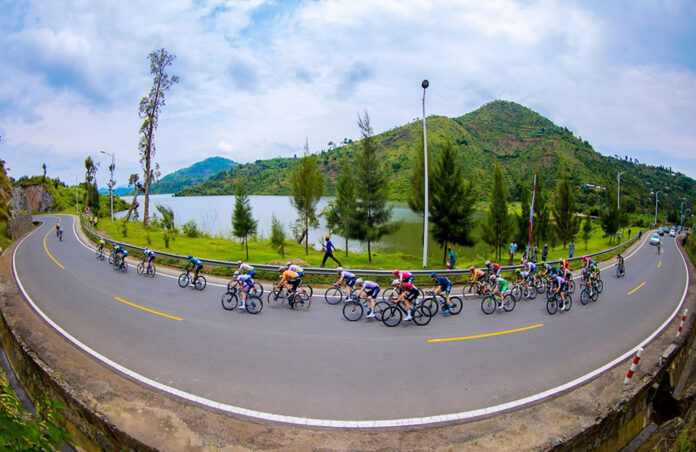
16 teams including Rwanda Cycling Team and Benediction of Rubavu District will participate in Tour du Rwanda 2020 that is set to kick off on February 23rd, 2020 to end on March 1st, 2020.

The fourth itinerary that will come from Rubavu is the one that will take a long session during this 12th competition.

This will be the second race of Tour du Rwanda at 2.1 level after the one of 2019 that was won by Erythrean Merhawi Kudus of Astana Pro during the beginning of this year. At the then session, Rwandan Joseph Areruya who was playing for Delko Marseille Province team of France took the 9th place.
The next Tour du Rwanda race will be sponsored by Cogebanque, Skol, MINISPOC, Rwanda Tea, Visit Rwanda, Canal +, and Rwanda National Police among others.
The yellow dress code or Mayon Jaune that was used to be given by MINISPOC will be given by Rwanda Tea since next year 2020.

Speaking during the Press Conference on November 21, 2019, Aimable Bayingana, FERWACY President said that the recent rumor news by a local newspaper was explained and writers had bad intention.
“We revealed the intention of journalists who wrote that article. They wanted to harass out image but nothing it changed. It will not stop our activities, rather it will increase our efforts to move forward” Bayingana said.

He added that Rwandans among the contestants are at a good level to compete. “It is expected that Benediction team of Rubavu and other local teams will participate and we hope see successful results,” he said.
The upcoming 12th Tour du Rwanda contest became international since 2009 where it was at the level of 2.1 until last year where it was won by Mugisha Samuel.
Benediction team from Rubavu that will participate in this contest is the 3rd in AFRICA in third session of cycling teams.

The race will start from Kigali City to come back in two last days. In the 7th part, contestants will be counting on time where they will be climbing Mont Kigali hill and will reach Rebero roads during the final days.

The very long session is the fourth that will depart from Rusizi to Rubavu in 206.3 kilometers.

The following are the 16 teams that will contest for Tour du Rwanda 2020:
National Teams: Rwanda, Cameroun, Algérie, Ethiopia, Erythrée and Belgium
Continental teams: Benediction Ignite Team (Rwanda), Bai Sicasal (Angola), Pro Touch (Afurika y’Epfo), Bike Aid (Mu budage) and Vino Astana Motors from Kazakhstan.

Professional riders’teams: Nippo Delko Marseille (France), Team Novo Nordisk (USA), Androni Giocattoli (Italie), Total Direct Energie (France), Israel Cycling Academy (Israël).
Itineraries for Tour du Rwanda 2020
1st itinerary:

On February 23, 2020: Kigali Arena- Kimironko (114.4Km)

2nd itinerary: on February 24, 2020: Kigali- Huye ( 120.5Km)

3rd itinerary: on February 25, 2020: Huye- Rusizi ( 42Km)

4th itinerary: on February 26, 2020: Rusizi-Rubavu ( 206.3Km)

5th itinerary: on February 27, 2020: Rubavu- Musanze ( 84.7Km)

6th itinerary: on February 28, 2020: Musanze- Muhanga ( 127.3Km)

7th itinerary: on February 29, 2020: Nyamirambo- Mont Kigali (4.5Km)

8th itinerary: on March 1,2020: Kigali Expo Ground- Rebero ( 89.3Km)

4 Endangered Mountain Gorillas Killed by Lightning in Uganda

0
Hirwa Gorilla Family

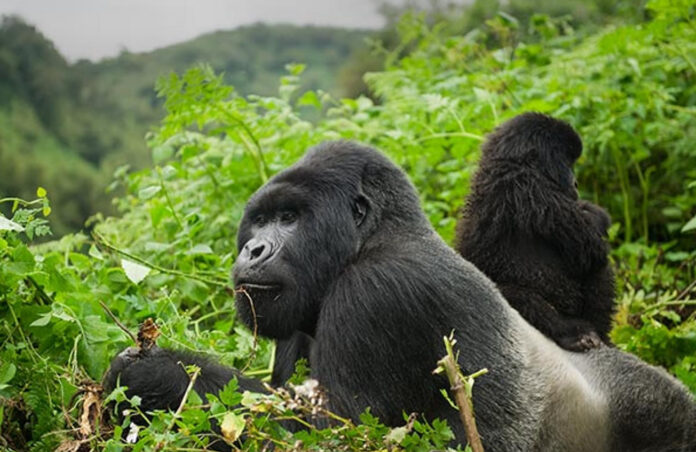
Four endangered mountain gorillas have been killed by lightning strike in Mgahinga Gorilla Natonal Park. According to the Uganda Wildlife Authority, three adult females, one of whom was pregnant, and a newborn infant were killed by lightening in Mgahinga National Park.

An international response team led by the Greater Virunga Transboundary Collaboration conducted field and post-mortem analyses that indicate the gorillas were struck by lightning during a severe storm on Feb. 3.

“Based on the gross lesions from the post-mortem, field assessment observation and history, the tentative cause of death for all four individuals is likely to be electrocution by lightning,” the Greater Virunga Transboundary Collaboration said in a statement Saturday. “Confirmation of the cause of death will be issued after a histopathology laboratory exam of the collected samples, which is expected to take 2-3 weeks.”

The four mountain gorillas were part of a group of 17 known as the Hirwa family, which had crossed into Uganda’s Mgahinga Gorilla National Park in August last year from the Volcanoes National Park in northern Rwanda.

It has been reported that the ranger reported hearing “the cries of surviving group members and chest-beating of the silverbacks immediately following the [lightning] strike,”. He called for the Gorilla Doctors, aresponse team of veterinary doctors and they went ahead to assess the situation on the ground.

The doctors found out that other gorillas were injured by the lightning strike, but the 13 remaining members of the Hirwa family have been found “in general good health” and “significantly calmer” some 650 feet from the location from where the lightening struck!

The response team, alongside park rangers, will “closely monitor” the health of the infant and the rest of the Hirwa family over the coming days.”This case, while extreme, also highlights the fragility of the endangered mountain gorilla population,” Gorilla Doctors said in its statement. “While we know mountain gorilla numbers are increasing, the total population is still relatively small.”

In 2008, there were an estimated 680 mountain gorillas in existence. Now, there are believed to be just over 1,000.

The mountain gorilla, one of two subspecies of the eastern gorilla, improved in status in 2018 from critically endangered to endangered on the International Union for Conservation of Nature’s Red List of Threatened Species.

Tribert Rujugiro: The Story of the Rwandan Billionaire

0

Tribert Rujugiro Ayabatwa is a controversial name that evokes both success and fraud in equal measure. If the measure of success is how fat one’s wallet is, then Rujugiro certainly features. However if success is the aggregate sum of an individual’s character, then the aging tycoon scores a flat F. One great writer put it well —that success without honor or character is like an unseasoned dish. It will satisfy your hunger but won’t taste good.

Similarly, another great novelist said it better—“be careful of your habits, for your habits become your character–be careful of your character for your character becomes your destiny.”

No better way of describing the 76-year-old Rujugiro than the above statement. Rujugiro’s habits read fraud from A to Z. These unscrupulous habits have shaped the character of man who thinks money can buy him anything.

His story would pass for a typical Mexican drug cartel –only this time operating from Africa. His mafia-like lifestyle has seen him amass wealth through undercover methods. He is the kingpin of tax evasion, money laundering, smuggling and eliminating any opponent who stands his way in his hunt for an extra dollar.

Rujugiro was born in Rwanda around 1941. Like many Rwandans, he spent most of his adult life as a refugee in Burundi. It is from Bujumbura that Rujugiro cut his teeth in the business world of cigarette smuggling. Before venturing in the shady world of cigarette smuggling; Rujugiro contributed to the bankruptcy of an insurance company he worked for as a clerk through an elaborate scheme of fake vehicle accidents.

It didn’t take long until he became a household name as a front man for the business interests of key military and political figures in the Jean Baptiste Bagaza regime in the 1970s and 80s. In turn they would protect his business via monopoly. The impunity that Rujugiro enjoyed as a result of these relationships led him to wide scale smuggling, money laundering and tax evasion, something he has specialized in till today.

Rujugiro excels at smelling prey. It is a business model that has followed the same pattern since his Bujumbura days. It views accountability deficits as an opportunity for investment, identifying a country for investment whose systems of accountability are non-existent or are decaying.

Alternatively, where there are strong systems of accountability, he seeks out powerful (already corrupt or potentially corruptible) individuals within those systems and integrates them into his business by offering them some equity. In exchange, they help him to evade accountability and gain impunity. This is how Rujugiro has managed to hold different governments at ransom everywhere he has been.

And this is the point of departure with Rwanda or the beef with Kigali. Those who know the system in Rwanda know that it cannot accept to be held at ransom by anyone. Moreover, the political and military elite in Rwanda is cohesive and under control, which made it impossible for Rujugiro’s business model to thrive.

When he was arrested in London following an arrest warrant issued by the South African prosecution office over tax evasion, Rujugiro, in his shallow thinking thought Rwanda would immediately sever diplomatic ties with London for “daring” to lock up Mr. money–bags.

The arrogance of thinking that individual crimes must be a state responsibility, largely informed by his past dealings with rogue states is what led Rujugiro to turn against his motherland. It was a case of a childish argument “you didn’t fight my war, let me fight you now” —which largely explains the megalomaniac character of this fellow.

To embark on his ill-advised revenge scheme, he linked up with disgruntled RDF deserters and fugitives like Kayumba Nyamwasa and the late Patrick Karegeya to form the terror group, Rwanda National Congress (RNC).

In an ill-advised classical case of “money can you buy you everything,” Rujugiro has reached out to his wallet to fund the “revenge” scheme. He has paid lobbyists to tarnish Rwandan image, issued free shares in his companies to buy loyalty from well-established individuals in the region and cashed PR agencies to write and find space for derogatory stories on the leadership in Kigali.

For example, in September last year, Rujugiro paid $440,000 to the Washington Based Podesta Inc., a lobbying firm to buy access to U.S. Congress where his main stooge, David Himbara would testify against Kigali with the aim of throwing mud at Kigali.

After the September hearing in the American Congress, the group also tried to secure a similar hearing in the Canadian parliament but failed after Rwandans in that country mobilized against them.

Parallel to this, Rujugiro has been active in the region. In Bujumbura, he showered the leadership with free gifts of shares in his tobacco and cement business in exchange for a safe haven for his anti-Rwanda activities. He bankrolled Burundi’s ruling party during the controversial elections held two years ago with a cash donation to finance the elections and forty(40) brand new pick-ups for use in the campaigns.

In Kampala, most Ugandans learned about the name Tribert Rujugiro for the first time when a local tabloid revealed that Rujugiro had signed a business venture with President Museveni’s young brother Gen. Saleh Akandwanaho worth millions of dollars. In the agreement Gen. Saleh is given shares in Rujugiro’s Tobacco Company (15%) and in exchange, Saleh agrees to protect Rujugiro’s assets in Uganda and in the region.

It is said, when Rujugiro is in Kampala, he is protected more than the Generals of that country. His sons also enjoy similar security protection. This explains the very reason Uganda’s Chieftaincy of Military Intelligence (CMI) has become the focal point for RNC recruitment inside Uganda.

“New Gold”

In South Africa, a recent book by investigative journalist Jacques Pauw titled “The President’s Keepers: Those Keeping Zuma in power and Out of Prison” sheds light to Rujugiro’s exploits.

Pauw names Rujugiro among a ring of “assassins, arms dealers, and gangsters” who have turned South Africa into one of the “top five countries in the world with the highest incidence of trade in illicit cigarettes,” he reveals that the smuggling is “referred to as ‘the new gold,’ something that places emphasis on the lucrative nature of the trade in which, Pauw underscores, “Profit margins approach 1,000 % in an industry that has grown into one of the largest organized criminal enterprises.”

The consequences of the smuggling are vast. According to the book, “Tobacco smuggling doesn’t just deprive the state of taxes and duties, but it often masks other crimes, including money laundering, fraud, drug smuggling and human trafficking,” Pauw writes: “The smuggling of tobacco costs government 3bn rand because of tax evasion, money laundering and corruption.”

In a crackdown against smuggling in ‘black gold’ that was giving a bad reputation to South Africa, Rujugiro found himself detained in the UK on a warrant of arrest by the South African Prosecution Services. In 2007 South African Revenue Services (SARS) halted all operations at Rujugiro’s Mastermind tobacco company, in Wilsonia following a $7.4 million fraud case. He faced 25 counts of fraud relating to non-payment of excise duties, 25 charges of illegally exporting goods from the Customs and Excise warehouse, six charges relating to the non-payment of Value Added Tax, and a charge of irregular dealing in goods

In Nigeria, Rujugiro defaulted on the terms of a concession granted by the local authorities under which his company (Leaf Tobacco Company) was to enjoy a 60 per cent waiver in the importation of cigarettes, tools and inputs against the promise to start production locally in three years. Six years down the line, Rujugiro’s company was yet to start manufacturing cigarettes locally but was still handsomely benefiting from the generous terms of the concession.

That is that character of the man behind anti-Rwanda propaganda today. A man drank on ill-gotten wealth and one who thinks he can use his money to evoke regime change. Good enough, such times have changed for Rwanda and changed

Good enough, such times have changed for Rwanda and changed for good and forever.

15 Celebs Struggling With Drug Addiction

0

Celebs Struggling With Drug Addiction – Celebrities and drugs have become inseparable. They had a humble beginning but rise to stardom which always come with money and fame have most of them turned to drugs which resulted in the abrupt end of some of them.

Amy Winehouse

Rising to stardom before the age of 25 with unique and becoming the first British female to win the Grammy Awards five times, Amy causes stir at red carpets events with her thinning look. And after being to the rehabs a few times due to her addiction to alcohol and heroin, she finally passed in 2011.

Lindsay-Lohan

Started her acting career aged 11 and became a household name in 2004; the 29-year-old was arrested twice in 2007 for being in possession of cocaine and driving under the influence of the same. A few visits to the rehabs she seems to be back on the right track.(Also Read: 10 Celebs Who Predicted Their Own Deaths Correctly)

Whitney-Houston

The “And I Will Always Love You” crooner is the most awarded female artist of all time and one of the highest selling musician with over 200 million albums sold worldwide. And after buying into most celebrities usual habits thanks n part to her ex-husband, in 2002 she admitted she had been using drugs including cocaine. She was dead in a bathtub in Beverly Hilton Hotel in 2012 as a result of heart disease and cocaine use.

Bobby-Brown

Houston’s ex-husband started smoking marijuana as a teenager and later graduated to cocaine and heroin in the 1990s often smoking weed laced with cocaine with Houston before they divorced in 2007. He claims to have stopped cocaine but still drinks.

Macaulay-Culkin

Remember the Home Alone child star? In 2004, he was arrested for being in possession of marijuana, Alprazolam and Clonazepam and sentenced to three one–year suspended imprisonment and over $6000 in fines. He seems to won over his heroin addiction but still smokes.

Lisa-Robin-Kelly

Kelly Made her acting debut in 1992 but later disappeared from the spotlight until 2010 when she was arrested for driving under the influence of drugs. She was found dead in August 2012 at the rehab center she was at the age of 43.

Britney-Spears

Launched her music career at the tender age of eight and released albums that shot her into might but her career came to a halt in 2007. Spending less than a day at a rehab centre she went to salon to shave her head, only to return to rehab after some time and managed to make it through.

Pamela-Anderson

She claimed to have ventured into drugs due to the series of abuse including rape she suffered as a child. She appeared to have overcome that now after dumping some of her old friends that have contributed to her wild habits.

Aaron-Carter

His drug problems started n 2009. Became a teen do with over 3 million copies of his second. He was arrested in 2008 for over speeding and marijuana was found in his car. He admitted having been to the Betty Ford Centre due to his addiction to Xanax. After losing his sister to an overdose in 2012 he vowed to live a clean life.

Denis-Rodman

An ex-basketball player with wild hair colors tattoos and body piercing earned himself the name “The Worm”. He entered rehab in May 2008 due to drug and alcohol addiction which showed no sign of abating after a year and has been in and out of rehab since them but he still into it.

Fresh Warning Against Serving Alcohol to Minors

0

Police has issued fresh caution and warned of “legal action” to anyone, who will be caught serving alcoholic beverages to children.

The public are also reminded that child protection is a “collective responsibility” and urged to report all sorts of child abuse, including sexual, child labour and corporal punishment.

The fresh call follows Saturday night operations in Rusizi District where children were found drinking alcohol in two bars located in Kamembe town.

The bars in question are Best friend and B13.

Chief Inspector of Police (CIP) Emmanuel Kayigi, the Police spokesperson for the Western region, said that Police and local leaders handed the children to their parents.

“The victims’ parents were located and educated on child rights and their responsibilities as parents to protect children before handing the children to them,” CIP Kayigi said.

He added: “Suspects will also face the law. The continuous operations falls in line with the implementation of the law on child protection, mainly focusing on bars, hotels and entertainment spots serving alcohol to minors; people who employ children to do domestic chores, rearing cattle, tea plantations, carrying goods in markets, mining and stone quarry.”

Article 27 of the law relating to the protection of a child states that, any person, who sells alcoholic beverages or tobacco to a child, causes or encourages a child to drink alcoholic beverages, to smoke or to go to bars commits an offence.

Upon conviction, the offender is liable to imprisonment for a term of not less than three months but not exceeding six months and a fine of between Rwf100, 000 and Rwf200, 000.

Drinking alcohol at an early age can reduce a child’s mental and physical abilities because the brain is still developing at the time.

Underage drinkers are also more likely to be exposed to other illicit drugs and the exposure may in the long-term cause them to commit other crimes.

CIP Kayigi reminded owners of all joints selling alcohol to always take a step to verify if they are suspicious of someone’s age.

Where is Made in Rwanda initiative after 4 years?

0

Four years after the launch of the Made in Rwanda Initiative, the program is gaining a lucrative momentum both in local and international markets where Rwandan Diaspora support it.

Only three years ago after its launch in 2015, the Minister of Trade and Industry, Soraya Hakuziyaremye, said the initiative was faced with persistent challenges that limited its impact in the local business ecosystem but has been reduced by the interventions of public and private sector which consummately supported the utility of Made in Rwanda products.

Like it had been noted earlier by experts about the newly introduced initiative, significant enhancements are also helping the country and individuals to create jobs, increase on their exports which is at the same time reducing trade deficits caused by increased imports.

In 2015, however, the products could not be exported in larger bulks because they lacked quality and also would not be consumed by the local market due to their exorbitant prices. These days’ rather government seems to have made sustaining interventions which are making the prices of the domestically manufactured goods affordable by the locals.
Government and the Private Sector Federation (PSF) continue to support the use of the products by both the local and regional markets through trade initiatives like the annual International Trade Fair which is held August every year with marketing themes that entice the utilization of the Rwandan products.

In regards to the cost of products, the government has also made provisions for preferential considerations of products and services in instances where local products are more expensive than imports.

The new tariffs also ensure that producers have preferential rates that help reduce cost of production. In addition, small and medium enterprises also benefit from affordable serviced land in special economic zones which helps in access of industrial estates with necessary production amenities. In the turn Made in-Rwanda initiative has reduced the trade deficit by about 36 per cent and increased value of total exports by about 69 per cent, from about $558 million to $943 million in the recent years.

The 2019/20 budget is FRW2,876.9 bn) which is an 11% increase on the 2018/19 revised budget (FRW2,585.2 bn). The domestic revenue (including domestic financing) is assumed to contribute 68% of the budget which is still consistent with 2018/19 domestic revenue contribution to budget which is a good indication that in coming years the budget will soon be largely domestically funded.

After the budget announcement a number of measures were sought to assist domestic local grown solutions, importantly, in an environment of tight liquidity and a constrained consumer pocket, for example the minister stayed customs taxes on selected goods to facilitate local manufacturers and also ease inflationary pressures on some of the basic goods.

This year’s trade expo, the 22nd that started on July 22 and winds on August 11 2019 attracted an estimated 500 exhibitors on 903 stands, both local and internationally from 25 African and other countries. “Previously, we had 700 stands but due to high demand for the stands we expanded the grounds as we are receiving more and more exhibitors from different countries,” Eric Kabera, PSF Head of Communications and Marketing, said.

The growing demand for more shop at the expo, he said, is expected to rather locate the trade expo grounds in Gahanga sector, Kicukiro district in Kigali. The new expo grounds would accommodate more than 35000 visitors. The annual trade fair has remained a platform that attracts foreign investments in the country for over the last 20 years.

“The more we trade with each other within Africa, the more we will be able export to the rest of the world, as well, but it increases the understanding of each other and creates a good relationship among our neighbors,” Rwanda President Paul Kagame said at the first PSF Golden Business Forum that took place on August 10 2019 bringing together over 1000 participants from Africa, Asia, Europe and America.

Launch of an Exhibition in Honour of the Victims of the 1994 Genocide Against the Tutsi

0

This Saturday 29th June 2019, members of the Rwandese Community in Oxford, UK, took part in a ceremony honouring the victims of the 1994 Genocide against the Tutsi at an event held at Pit Rivers Museum, Oxford.

This activity was organised within the framework of the 25th Commemoration of that genocide. It mainly consisted of the launch of an exhibition called Traces of the Past made of a film. This exhibition gives faces and names to the victims and foregrounds the voices of survivors.

In this film, survivors from Rwandan community members now living in the UK tell their stories of survival and how they make meaning of living with unending trauma caused by the immense loss their beloved ones.

Traces of the Past is woven within the “Bearing Witness- Kwibuka25” Project funded by Engagement with Research Seed Fund. It is based on Dr Julia Viebach’s African studies Centre / Faculty of Law, University of Oxford) research on memory and justice in Rwanda and her ongoing artwork and community curation.
Traces of the Past encourages us all to foster empathy towards the “distant” suffering of those often seen as “others”. People are all invited to listen to and learn from survivors’ accounts and to acknowledge their resilience, the strength and creativity in rebuilding their lives in the UK.
This invitation comes at a very worrying time where see the rise of xenophobia, right-wing populism here in the UK and in many parts of the world.

Another aspect of this exhibition is that the survivors learnt objects that embody precious memories of loved ones who they lost. These objects on display at Pit Rivers Museum materialise the everyday lives of the people the survivors lost: family happy moments.
Through these objects, survivors also narrate unbelievable acts of inhumane violence, the failure of international community to intervene to stop the genocide, and how the world fell apart around them on April 6th after the shooting down of the plane carrying President Habyarimana.
These objects include a drum, a milk container (Inkongoro), a board game (Igisoro), radio batteries, a sewing machine.

The ceremony consisted of watching a short film Traces of the Past followed by a panel discussion involving the Researcher, Julia Viebach, and two survivors: Caritas Umulisa, and Jean Kayigamba which focussed on the importance of such projects to combat growing genocide revisionism and denial.
It is important that survivors are given space to tell their stories. This is crucial at a time where we see the surge of fake genocide survivors abroad being given credence by gullible Western media and some international academic institutions, especially during the commemoration times year in year out.

This exhibition is dedicated to the grandparents, parents, children, brothers, sisters, uncles, aunties, cousins and neighbours mercilessly massacred during the 1994 genocide against the Tutsi.
It will run at Pit Rivers Museum till the end of December 2019.

Animal Rights Groups Fail to Hijack Africa Wildlife Economy Summit

0

Consumptive tourism which includes wildlife trophy hunting and hunting for meat contributes 90% of the tourism revenue that southern Africa generates annually said an Oxford University trained Associate Professor of ecology and economics, Dr Brian Child, speaking at the Africa Wildlife Economy Summit.

Dr Child said that non-consumptive tourism that includes travel tourism only contributes a distant 10% of southern Africa’s annual tourism revenue.

“If Africa is serious about growing wildlife economy it needs to grow both its non-consumptive and consumptive use tourism enterprises, particularly consumptive tourism that Dr Brian Child said contributes 90% of southern African countries’ annual tourism earnings,” said Dr Morrison Mtsambiwa, one of Africa’s top ecologists and former CEO of the Kavango Zambezi Transfrontier Conservation Area (where Botswana, Namibia, Zambia and Zambia share their borders) and former Director General of the Zimbabwe Parks and Wildlife Management Authority.

Beyond tourism enterprises, the growth of Africa’s wildlife economy can be further boosted by trade in Africa’s abundant wildlife products such as ivory and rhino horn.

Sadly, the text of the UNEP convened and Space for Giants (a western animal rights groups that is against hunting and ivory trade) sponsored Africa Wildlife Economy Summit held in Victoria Falls, Zimbabwe from 24-25 June 2019 was disturbingly silent on consumptive use economic activities such as hunting.

Therefore, the agenda that was set by Kenya-based UNEP and Space for Giants (SfG) to grow the African wildlife economy exclusively using non-consumptive tourism raised a lot of curious and puzzling questions than answers.

As the reality sank in that non-consumptive use was curiously excluded from the Summit agenda, the next and inevitable question was who would put it consumptive use on the Summit agenda?

To the relief of the pro-consumptive tourism delegates at the Summit, Zimbabwe President of Zimbabwe, Emerson Mnangagwa authoritatively and refreshingly brought the consumptive use of wildlife issues on the Summit agenda while delivering his keynote address to the Africa Wildlife Economy Summit. To the shock and of course disappointment of animal rights groups, President Mnangagwa touched on hunting, a topic that was suspiciously excluded from the Summit agenda.

“Safari hunting is a vital cog in wildlife economy,” said President Mnangagwa. “Profits from hunting are used to provide water and fencing to reduce human wildlife conflict and law enforcement against poachers. We continue to call for free trade in hunting products as these have positive impact on the economies of our countries.”

This pro-hunting remark spelt doom and failure to the western animal rights groups’ attempt to exclude wildlife use from the Summit agenda. Of course they shared that shock with local anti-wildlife use tourism business leaders that had a hand in crafting the wrong and suspicious non-consumptive use ‘recipe’ for growing Africa’s wildlife economy.

President Mnangagwa said that the animal rights groups were wrong in their thinking that animals should not be used to sustain people’s livelihoods.

As President Mnangagwa continued to use his keynote address to put on the Africa Wildlife Economy Summit agenda, the sorely missed consumptive use issues that could not go without being discussed if Africa is serious about growing its wildlife economy; smiles were visibly written on almost all the pro-sustainable use African delegates with long faces worn by the western animal rights groups that wanted to hijack the Summit to introduce animal rights groups values into southern Africa.

President Mnangagwa then said in a pointed call for Zimbabwe to be allowed to sell its stockpiled ivory and rhino horns, “Currently Zimbabwe has about US$600 million worth of ivory and rhino horns stocks, most of which came from natural attrition of those animals. “If we are allowed to dispose the same under agreed parameters, the revenue derived therefrom would suffice to finance our operational conservation efforts for the next two decades. We encourage a process where accruing benefits from natural resources are fairly and equitably shared among communities living within wildlife areas. This way the wildlife resources add value and improve the quality of life of local communities and the quality of life of animals themselves.”

If this was a boxing match against animal rights groups then President Mnangagwa must have landed the knockout punch on animal rights groups when he went further to explain that animal rights groups are a threat to wildlife conservation because they put wildlife above the people and yet God teaches that human beings are the custodians of wildlife and should benefit from it.

President Mnangagwa said that it was high time that the UN Convention on International Trade In Endangered Species of Wild Flora and Fauna (CITES) was made aware that the one-shoe-size fits all approach that is creeping in its decision-making process to ban ivory trade was an unfair and intolerable method of determining who should trade or should not trade in wildlife products such as ivory and rhino horn.

This was a timely message to CITES member countries worldwide, whose votes determine whether or not proponent countries can be allowed to trade in ivory and rhino horn. The CITES Secretary General Yvonne Higuero whose organization presides over the CITES voting system got the message loud and clear as she was seated in the front row as President Mnangagwa delivered his keynote address.

President Mnangagwa said that it was crucial that Africa consolidates its position in support of sustainable development as we head to CITES COP18.

Soon after, President Mnangagwa finished his laudable pro-consumptive tourism and wildlife use speech all the other southern African countries presidents also similarly spoke in support of ivory trade and consumptive use and the need for rural communities living side by side with wildlife to also benefit from it. It was impressive that the southern African countries presidents were not divided by western animal rights group as sadly happened during president Khama’s animal rights influenced wildlife management era, when Botswana uncharacteristically and worryingly opposed ivory trade and hunting. The united southern African presidents included Edgar Lungu of Zambia, Hage Geingob of Namibia and Mokweetsi Masisi of Botswana as well as Angolan president Jao Lourenco who was represented by his minister of environment.

Fourteen African ministers of environment from all regions of Africa attended the Summit.
Rwanda President Kagame while African Union Chair was persuaded to support this initiative to hold the first ever Africa Wildlife Economy Summit in Victoria Falls Zimbabwe.
Over 40 community representatives from 12 African countries attended the African Wildlife Economy Summit and called for the need to reduce poverty at household level through turning wildlife into a rural economic engine.

“The declaration is about sustainable use which includes hunting and need for the communities living next to protected areas to benefit from wildlife and natural resources,” Dr Lamson Maluleke a representative of South Africa’s Limpopo Province-based Makuleke Community.

Meanwhile, Mr Charles Jonga, the Executive Director for the Zimbabwe Communal Areas Management Programme For Indigenous Resources (CAMPFIRE) Association said that he was not aware that the Space for Giants “is an animal rights organization.” He said that he was concerned that there had been an attempt to have the African Wildlife Economy Summit exclusively focus on non-consumptive tourism.

One of Southern Africa’s most successful non-consumptive tourism businesspeople who is supporting the Africa Wildlife Economy initiative, Mr Derek Joubert publicly announced his anti-hunting position while taking part in a tourism investment challenges panel discussion. “I am not a hunter,” he said. “And so I was a bit worried coming up here (on the stage) and be sustainably harvested myself. Wildlife is what we have to protect, I don’t even like the word conservation I think we have got to evolve this to a new conversation – a new ethic, a new earth ethic.”

Mr Joubert said that one of the initiatives that they are working on is to raise US$200 million to acquire tourism properties and operate them for three years, working with communities and in the last phase between three and four years do a complete handover to the communities.

“I know that the Space for Giants is an animal rights groups and that they are coming in the name of ecotourism which is an easy product to sell to communities and internationally,” said a Namibian representative for the Namibian Association of CBNRM Support Organisations (NACSO), Ms Max Louis. “Therefore, they are using ecotourism to derail the sustainable use agenda in southern Africa. We will not allow animal rights groups to come and change our sustainable use agenda in southern Africa. We will continue to defend sustainable use. We were aware that the animal rights agenda was being forced on us.”

However, while Southern Africans might not fully welcome the Space for Giants and Derek Joubert sponsored non-consumptive tourism drive in southern Africa, well placed sources said that they have already started meeting southern African governments, in order to introduce this initiative.

They have also started promoting non-consumptive tourism projects in Rwanda, Kenya and Uganda where progress is at a comparatively advanced stage compared to their initial efforts in southern Africa.

“At the moment the consumptive tourism such as hunting is bringing much more money to the majority of Africans,” said Alderman Jerry Gotora, the Chairman of painted dog project and Founding Director of Gonarezhou Conservation Trust. “The capitalists don’t want to see more money going to the majority of Africans. They think that blacks from this region shouldn’t be privileged to enjoy money from hunting. They want to keep money to themselves through an exclusive focus on non-consumptive tourism. That is why they excluded consumptive use from the agenda of the Africa Wildlife Economy Summit.”
The Africa Wildlife Economy Summit came to southern Africa at a time when Botswana President Masisi is facing fierce animal rights opposition for listening to his country’s citizens, particularly those from rural communities to resume hunting.

Well-placed sources said that President of Botswana Mogkweetsi Masisi had to be persuaded to attend the African Wildlife Economy Summit after refusing to attend a Summit sponsored by the Species for Giants; an animal rights group that worked with Mokgweetsi’ well publicized opponent, former President of Botswana Khama. The Space for Giants reportedly apologised to President Masisi for working against both the citizens of Botswana’s conservation values and his political future but he still turned down the Space for Giants overtures. Well placed sources said that President Masisi only agreed to attend the Africa Wildlife Economy Summit after having been persuaded to do so by a President from a very friendly southern African country.

Ironically, President Masisi is curiously listed as a member of the Space for Giants on their website, alongside with Presidents of Kenya, Uganda and representatives of western animal rights groups, etc. He was apparently made to sign-up to this membership incognito when he succeeded Khama. There is no doubt that President Masisi might be making frantic efforts to have his country and face photo removed from the Space for Giants website.

President Kagame calls African countries to Strive for their Self reliance

0
President Paul Kagame

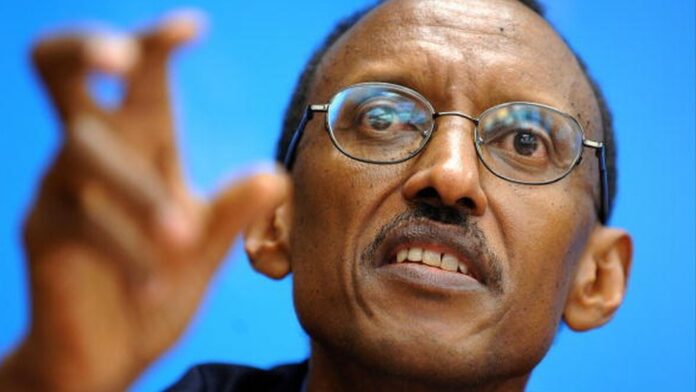
President Paul Kagame, a president of Rwanda as well as a leader of UN in Global Citizen Festival in South Africa, asked countries to strive their self-reliance as a key of their development.

President Kagame explained that the more the countries look for their ways the more they get to be independent.

“Being independent requires hardworking and self-assessment with goal achieving”

He said that African countries also need to continue building the capacity to generate revenues domestically to entrench a sense of ownership of the SDGs, reduce dependence on ever scarce funding, and ensure sustainability of results.

“Our countries also need to continue building the capacity to generate revenues domestically so that we can entrench a sense of ownership of the SDGs, reduce dependence on ever scarce funding, and ensure sustainability of results,” President Kagame said, adding that “We are encouraged by the good progress in the institutional reform of the African Union, which is already enhancing self-financing, efficiency and coordination.”

“Let us take advantage of this momentum, to collaborate even more productively with our global partners, and move faster towards attaining the SDGs by 2030,” Kagame urged.

The Global Citizen Festival 2018 was celebrated by celebrating also 100 years since Nelson Mandela was born.

President Kagame added on that this African Union changes intended to strive the self-reliance of this organization as a key to a better development.

President Paul Kagame has called on African countries to keep up the momentum of self-reliance as protected in the African Union institutional reforms in a bid to move faster to achieving the Sustainable Goals (SDGs).